

Plasma cutting has a reputation problem. Many experienced fabricators still think of it as a brute-force method for blasting through thick steel plate, something you pull out when finesse doesn’t matter. That reputation is outdated. Modern plasma cutting systems, especially high-definition CNC setups, now deliver speed, versatility, and edge quality that rival laser cutting on a fraction of the capital investment. Whether you’re running a busy fabrication shop or managing complex structural jobs, understanding what plasma cutting actually does and how to use it well can directly improve your throughput and cut quality.
Table of Contents
- The basics: What is plasma cutting and how does it work?
- Plasma cutting vs. other methods: Where does it fit?
- Expert techniques for precision and efficiency
- Applications: Materials, thickness, and CNC plasma advances
- The real-world edge: What most guides miss about plasma cutting
- Take your plasma cutting to the next level with the right tools
- Frequently asked questions
Key Takeaways
| Point | Details |
|---|---|
| What plasma cutting is | A thermal process using ionized gas to efficiently cut conductive metals. |
| Compared to alternatives | Plasma offers speed and versatility between oxy-fuel and laser for common metals. |
| Technique matters | Edge quality and efficiency improve dramatically with expert torch handling and process knowledge. |
| Broad applications | With the right setup, plasma cutting handles a wide range of thicknesses and materials, especially steel and aluminum. |
| Choose equipment wisely | Matched technology and skill unlock precision and time savings in advanced fabrication. |
The basics: What is plasma cutting and how does it work?
Plasma cutting is a thermal cutting process that uses a high-velocity jet of ionized gas at temperatures exceeding 20,000°C to melt and expel molten metal from electrically conductive materials. That temperature figure isn’t just impressive on paper. It means the arc cuts faster and cleaner than most alternatives, with a focused energy transfer that minimizes heat spread into the surrounding base metal.
Here’s how the process breaks down step by step:
- Power supply activates a high-frequency arc between the electrode and the workpiece.
- Gas flows through the torch and becomes ionized, forming a plasma state.
- The plasma jet melts the metal at the cut line.
- High-velocity gas expels the molten material from the kerf (the cut channel).
- The torch moves along the cut path, completing the cut.
The gases used affect cut quality and material compatibility. Air is the most common and cost-effective option for general steel work. Nitrogen gives cleaner cuts on stainless steel and aluminum. Oxygen improves cut speed on mild steel. Argon-hydrogen mixtures are reserved for thick stainless or aluminum where surface finish is critical.
Core system components:
- Power source (determines amperage range and duty cycle)
- Plasma torch (hand or machine torch)
- Consumables (electrode, nozzle, shield)
- Gas supply and regulator
- Ground clamp connected to the workpiece or cutting table
“The plasma arc reaches temperatures no oxy-fuel flame can match, which is exactly why it cuts faster and with less thermal distortion on thinner materials.” This is a practical reality that matters when you’re working with sheet metal or structural profiles where warping costs time and money.
Pro Tip: Always check torch-to-work distance before cutting. Even a few millimeters of deviation from the manufacturer’s standoff spec can cause arc instability, wider kerfs, and faster consumable wear. Consistent standoff is one of the most overlooked variables in plasma cut quality.
The cost-saving potential in manufacturing is directly tied to process efficiency, and plasma cutting’s speed and low setup time make it one of the fastest ways to reduce cycle time on metal cutting operations.
| Component | Function | Key variable |
|---|---|---|
| Power source | Drives the arc | Amperage output |
| Torch | Delivers plasma jet | Standoff distance |
| Electrode | Initiates arc | Hafnium tip condition |
| Nozzle | Shapes plasma stream | Orifice diameter |
| Gas supply | Creates plasma state | Gas type and pressure |
Plasma cutting vs. other methods: Where does it fit?
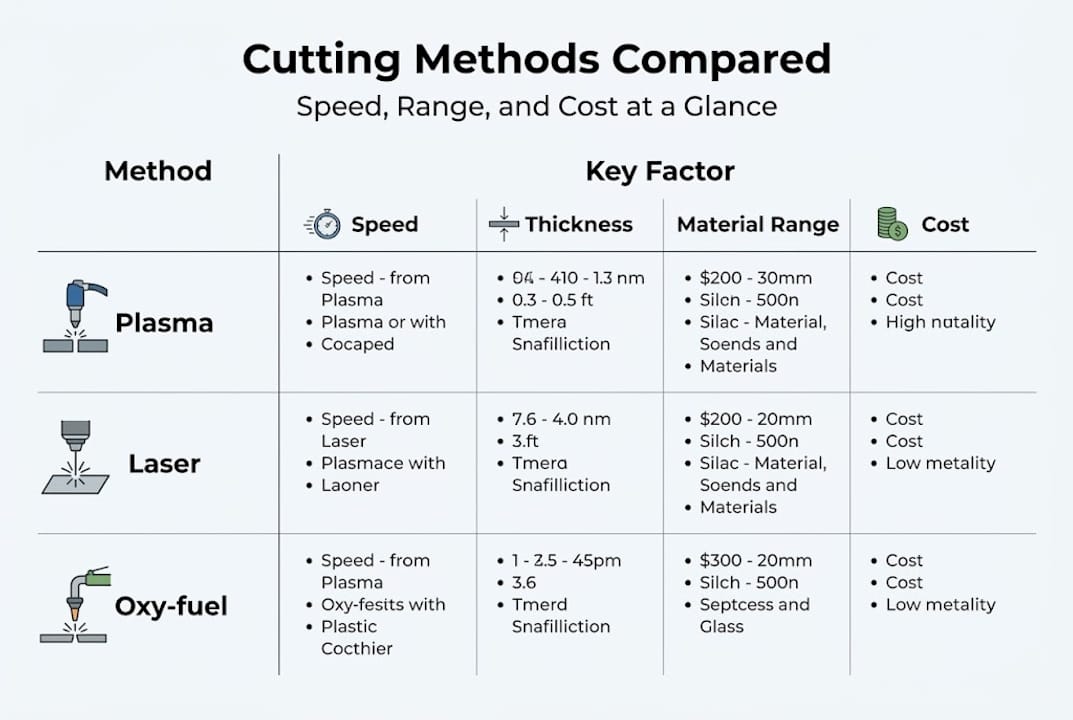
Understanding how plasma stacks up against oxy-fuel and laser cutting helps you make smarter decisions about which process belongs on which job. Each method has a clear sweet spot, and knowing where plasma wins saves you time and money.
Plasma is faster and cleaner than oxy-fuel on materials up to 40mm thick and works on a much wider range of metals. Oxy-fuel is limited to carbon steel and requires preheating, which adds time. Plasma handles steel, aluminum, stainless, brass, and copper without preheating. For structural steel up to 40mm, plasma is almost always the faster choice.
Against laser, the comparison is more nuanced. A 40kW laser cuts 20mm steel at around 8 meters per minute. Plasma handles the same thickness at roughly 4 meters per minute, but the laser’s capital cost is four to six times higher. For thin sheet metal under 6mm where precision tolerances are tight, laser wins on edge quality. For medium to heavy plate work, plasma wins on cost per cut and material flexibility.
How to choose the right cutting method for your job:
- Material under 6mm, tight tolerances: Laser cutting is the better choice for production runs.
- Steel or aluminum 6mm to 40mm: Plasma cutting offers the best balance of speed and cost.
- Carbon steel over 40mm: Oxy-fuel remains competitive due to lower operating costs at extreme thickness.
- Mixed materials in a single shop: Plasma wins on versatility since it handles multiple metals without process changes.
- High-volume precision plate work: High-definition CNC plasma narrows the gap to laser at significantly lower equipment cost.
The Hypertherm Powermax45 XP is a strong example of a mid-range plasma system that handles both hand cutting and light CNC work with clean results on materials up to 16mm. For heavier structural work, the Miller Spectrum 625 X-TREME delivers reliable performance on thicker plate. Choosing the right unit for your typical material range is as important as the technique itself.
Improving cutting processes in a fabrication shop often starts with matching the cutting technology to the actual job mix rather than defaulting to a single method for everything.
| Method | Best thickness range | Speed on 20mm steel | Material range | Relative cost |
|---|---|---|---|---|
| Plasma | 1mm to 50mm | ~4 m/min | All conductive metals | Medium |
| Oxy-fuel | 6mm to 300mm+ | ~0.5 m/min | Carbon steel only | Low |
| Laser (40kW) | 0.5mm to 25mm | ~8 m/min | Most metals | High |
Expert techniques for precision and efficiency
Choosing plasma is step one. Getting the most out of it requires understanding techniques that most operators only learn after years of trial and error. These aren’t minor adjustments. They directly affect edge squareness, surface finish, and how fast you can move through a job.
Arc swirl and cut direction
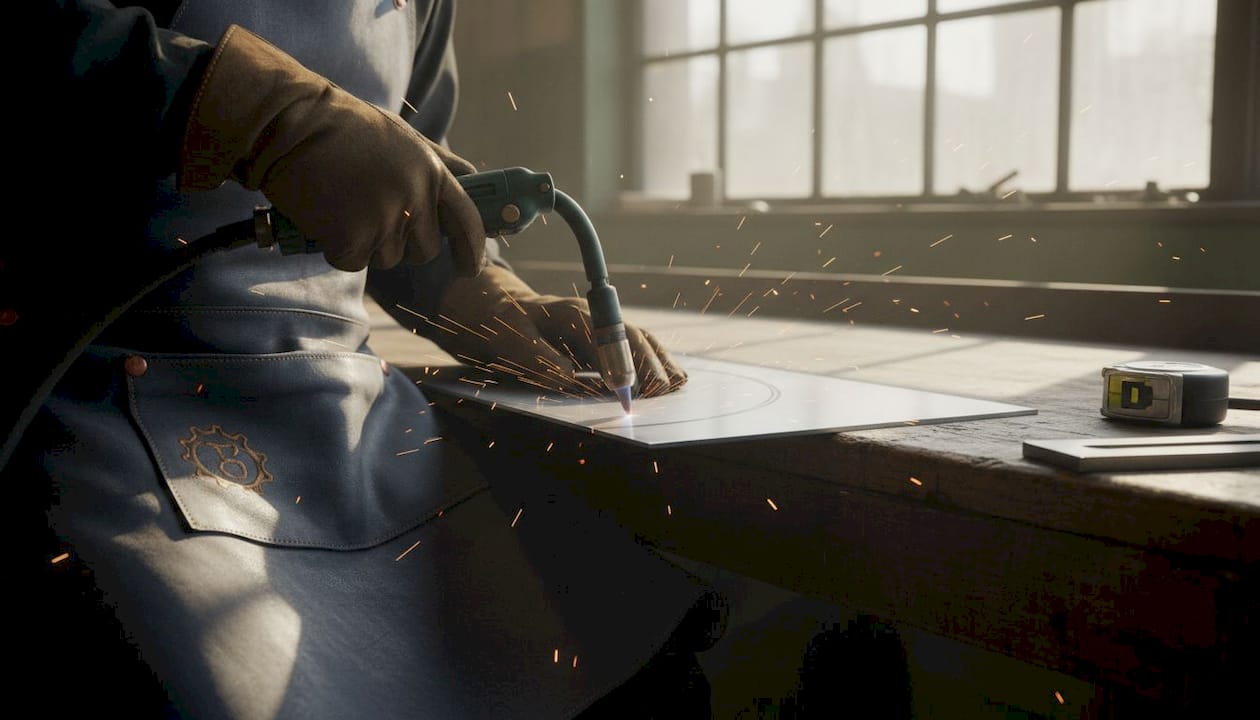
The plasma arc inside the torch swirls in a specific direction depending on torch design. This swirl means one side of the cut is always squarer than the other. Cut to the right of your torch motion for the squarest edge on the part you’re keeping. On CNC systems, program your cut paths so the part is always on the right side of the torch travel direction. This single adjustment can eliminate post-cut grinding on many jobs.
Chain cutting
Chain cutting links multiple cuts together so the torch moves from one cut directly into the next without fully stopping and restarting. This reduces the number of pierces, which are the most wear-intensive moments for consumables. Fewer pierces means longer consumable life and faster cycle times. The trade-off is that path planning becomes more complex, and not every part geometry allows it.
Technique upgrades that improve speed and edge quality:
- Match amperage to material thickness rather than running maximum power on thin material
- Use the correct consumable set for the gas type you’re running
- Maintain consistent travel speed. Slowing down causes dross buildup on the bottom edge
- Keep consumables fresh. Worn nozzles cause arc wander and wider kerfs
- Allow the torch to fully pierce before moving. Premature motion causes incomplete cuts and consumable damage
“The difference between a good plasma operator and a great one isn’t the machine. It’s knowing when to slow down, when to chain cuts, and how to read the arc.”
Pro Tip: When cutting curves or complex contours, reduce travel speed by 10 to 15 percent compared to your straight-line setting. The arc needs more time to follow the path cleanly, especially on tight radii. Rushing curves is the most common cause of rough edges on profile cutting.
The Hypertherm Powermax85 SYNC is built for exactly this kind of precision machine torch work, with cartridge-based consumables that take the guesswork out of setup and replacement timing.
Applications: Materials, thickness, and CNC plasma advances
Plasma cutting’s real strength is its range. No other single cutting process handles as many materials across as many thickness ranges with the same combination of speed and affordability.
Materials plasma cutting handles well:
- Mild steel (most common application)
- Stainless steel (requires nitrogen or argon-hydrogen gas for clean edges)
- Aluminum (requires clean gas and higher travel speeds)
- Copper and brass (conductive, but require careful parameter setup)
- Galvanized and coated steel (ventilation is critical due to fumes)
High-definition CNC plasma has changed the precision equation significantly. Modern HD plasma systems achieve tolerances of plus or minus 0.5mm on steel up to 50mm thick, which puts them in range of entry-level laser systems for many structural and industrial applications. The capital cost difference remains substantial, making HD plasma the practical choice for small and medium shops that need precision without a seven-figure equipment budget.
Jobs that benefit most from plasma cutting:
- Structural steel fabrication (beams, brackets, gussets)
- HVAC ductwork and sheet metal components
- Agricultural equipment repair and fabrication
- Trailer and chassis manufacturing
- Artistic metalwork and signage
- Pipe and tube cutting with rotary attachments
The Hypertherm Powermax 65 SYNC covers the mid-heavy range of these applications, handling up to 25mm at rated cut and 38mm at severance, which covers the majority of structural fabrication work.
Optimizing shop productivity often comes down to matching the right cutting process to the right job. Plasma’s versatility across materials and thicknesses means fewer process changes and faster job turnaround.
| Application | Plasma optimal? | Better alternative |
|---|---|---|
| Steel plate 6 to 50mm | Yes | None at this cost |
| Thin sheet under 3mm | Marginal | Laser |
| Carbon steel over 80mm | Possible | Oxy-fuel |
| Aluminum 6 to 40mm | Yes | Laser for tight tolerance |
| Stainless 10 to 50mm | Yes with correct gas | Laser for thin |
The real-world edge: What most guides miss about plasma cutting
Most technical guides focus on cut speed and edge quality metrics. Those numbers matter, but they don’t capture the full picture of why plasma cutting delivers real ROI in working shops.
Setup time is the variable that spec sheets never mention. A plasma cutter is ready to cut in under two minutes. No preheating, no gas mixing ratios to dial in for each material, no extended warm-up cycles. For shops running mixed jobs with frequent material changes, that setup speed compounds across a full workday into significant productive time recovered.
Operational cost is another area where plasma’s advantage is often understated. Consumable costs per cut are predictable and manageable, especially with modern cartridge-based systems. The real shop performance data from high-use systems consistently shows that consumable life is far more dependent on operator technique than machine quality. Shops that train their operators on pierce technique and travel speed management see consumable costs drop by 30 to 40 percent compared to shops that treat plasma as a set-and-forget tool.
The versatility argument is also undervalued. A single plasma system can handle hand cutting on site, be mounted to a CNC table for production runs, and be used with rotary attachments for pipe work. That flexibility means one capital investment covers multiple production needs, which is a genuine competitive advantage for small and medium fabrication businesses.
What most guides also miss is the human factor. Plasma cutting has a relatively short learning curve compared to oxy-fuel or TIG welding. A skilled operator can be productive within days, not weeks. For shops managing labor availability challenges, that matters as much as any technical specification.
Take your plasma cutting to the next level with the right tools
The techniques and comparisons in this guide are only as good as the equipment you’re running them on. Underpowered or poorly matched plasma systems limit what’s possible regardless of operator skill.

At Simpleweld, we stock the plasma cutting systems that professional fabricators actually rely on. The Hypertherm Powermax45 XP is a top choice for versatile shop and field use, while the Miller Spectrum 625 X-TREME delivers proven performance on heavier plate work. Whether you’re upgrading your current setup or building out a new shop, our full equipment range covers everything from entry-level hand cutting to industrial CNC-ready systems. Browse our selection and match the right machine to your actual job requirements.
Frequently asked questions
What types of metals can be cut with plasma cutting?
Plasma cutting works on any electrically conductive metal, including steel, aluminum, stainless steel, brass, and copper. The process uses ionized gas at over 20,000°C to melt and expel material, making it effective across a wide range of conductive alloys.
What thickness can plasma cutting handle?
Plasma cutting handles material up to 160mm thick, though optimal cut quality and speed are achieved up to 50mm in most shop environments. Beyond that range, oxy-fuel becomes more cost-effective.
How does plasma cutting compare to oxy-fuel cutting?
Plasma is faster and cleaner than oxy-fuel on materials up to 40mm and works on a broader range of metals without preheating. Oxy-fuel remains competitive only on very thick carbon steel where plasma systems reach their limits.
Can plasma cutting achieve high precision?
Yes. High-definition CNC plasma systems achieve near-laser tolerances on steel, aluminum, and stainless up to 50mm thick, making them a practical alternative to laser cutting for many structural and industrial applications.
What are common mistakes to avoid with plasma cutting?
Incorrect torch standoff distance, wrong gas selection for the material, and inconsistent travel speed are the most common errors. Each one degrades edge quality and accelerates consumable wear, directly increasing your cost per cut.
Recommended
- Miller Spectrum 625 X-TREME Plasma Cutter 12 ft. XT40 torch included ( – Simpleweld
- Hypertherm Powermax45 XP plasma cutter - 20ft hand torch package inclu – Simpleweld
- Tap Magic EP-Xtra Cutting Fluid, 12 oz, Aerosol Can – Simpleweld
- 1 Gallon Tap Magic Cutting Oil EP-Xtra, squeeze bottle – Simpleweld