

Not all abrasive wheels are built the same, and treating them like they are is one of the costliest mistakes you can make in a fabrication shop. Flap discs occupy a specific and highly valuable place in your grinding arsenal, bridging the gap between aggressive stock removal and smooth surface finishing in a single tool. Whether you’re blending a weld bead on structural steel or finishing the edges of an aluminum component, knowing how flap discs work and when to reach for one can save real time and money on every job. This guide covers everything you need to choose, use, and get the most out of flap discs on the shop floor.
Table of Contents
- Understanding flap discs: Definition and key features
- Flap discs vs. grinding wheels: Performance and advantages
- Types of flap discs and selecting the right one
- Best practices for using flap discs safely and effectively
- Why flap discs are the unsung hero of welding shops
- Find the right flap discs and welding supplies for your next job
- Frequently asked questions
Key Takeaways
| Point | Details |
|---|---|
| Flap disc basics | Flap discs are layered abrasive tools ideal for weld blending, stock removal, and finishing. |
| Greater efficiency | Flap discs often reduce finishing times and improve surface quality compared to traditional grinding wheels. |
| Type selection matters | Use the right flap disc grain, size, and shape for your specific metalwork. |
| Safety first | Wearing proper PPE and following best practices greatly extends flap disc life and protects the user. |
Understanding flap discs: Definition and key features
A flap disc is a type of coated abrasive tool used with angle grinders. It consists of overlapping triangular sections of abrasive cloth, called flaps, arranged in a fan pattern around a rigid central hub. As the outer flaps wear away during use, fresh abrasive is continuously exposed, which extends the tool’s working life and keeps cutting performance consistent throughout the disc’s lifespan.
The backing material plays a significant role in how a flap disc performs. Fiberglass backings are the most common and offer a good balance of rigidity and flex. Plastic backings are lighter and tend to produce less vibration, which is helpful during extended use. The abrasive cloth itself is bonded to these flaps and comes in several materials, including aluminum oxide, zirconia alumina, and ceramic alumina, each suited to different metals and workloads.
Shape matters just as much as material. Two primary profiles dominate the market:
- Type 27 (flat profile): The grinding surface sits flush, making it ideal for flat or slightly curved surfaces and general weld blending.
- Type 29 (conical profile): The angled design increases surface contact at higher attack angles, allowing more aggressive material removal on irregular surfaces. Type 29 flap discs are the go-to when you need faster stock removal on contoured workpieces.
A high-density flap disc packs more abrasive material into the same disc diameter. The result is a longer-lasting product with a more consistent cut rate. Standard density discs are more economical and well-suited to lighter work or finishing passes.
| Feature | Standard flap disc | High-density flap disc |
|---|---|---|
| Abrasive layers | Fewer, spaced flaps | More tightly packed flaps |
| Lifespan | Moderate | Extended |
| Cut rate | Consistent for light tasks | Consistent for heavy stock removal |
| Best use | Finishing, light blending | Heavy grinding, production work |
As the introduction to different kinds of flap discs notes, matching disc type to application in the manufacturing sector directly affects productivity and surface quality. For welders sourcing flap discs for sale, knowing these distinctions upfront saves you from buying the wrong tool.
Pro Tip: For production runs where you’re blending welds all day, go high-density. For one-off finishing work or lighter stock removal, standard density gives you a more cost-effective result without sacrificing quality.
Common applications for flap discs include weld bead blending, deburring cut edges, surface preparation before coating, rust and scale removal, and smoothing welds on pipe and structural sections.
Flap discs vs. grinding wheels: Performance and advantages
Most welders start out with grinding wheels because they’re familiar. But familiarity can work against you when a better tool is sitting right on the shelf. The differences between flap discs and standard grinding wheels go well beyond surface appearance.
Here’s a direct side-by-side comparison across the factors that matter most on the job:
| Factor | Flap disc | Grinding wheel |
|---|---|---|
| Material removal rate | Moderate to high | High |
| Surface finish quality | Smooth, consistent | Rough, requires follow-up |
| Tool lifespan | Longer (self-renewing surface) | Shorter for equivalent work |
| Operator fatigue | Lower (less vibration) | Higher |
| Versatility | Grind and finish in one pass | Grinding only |
| Heat generation | Lower | Higher |
The key advantage of flap discs is consolidating two steps into one. With a grinding wheel, you typically grind first and then switch to a flap disc or sanding pad to finish the surface. With a flap disc, especially in the mid-grit range (60 to 80 grit), you can handle both steps in a single pass, particularly for weld blending and surface prep.
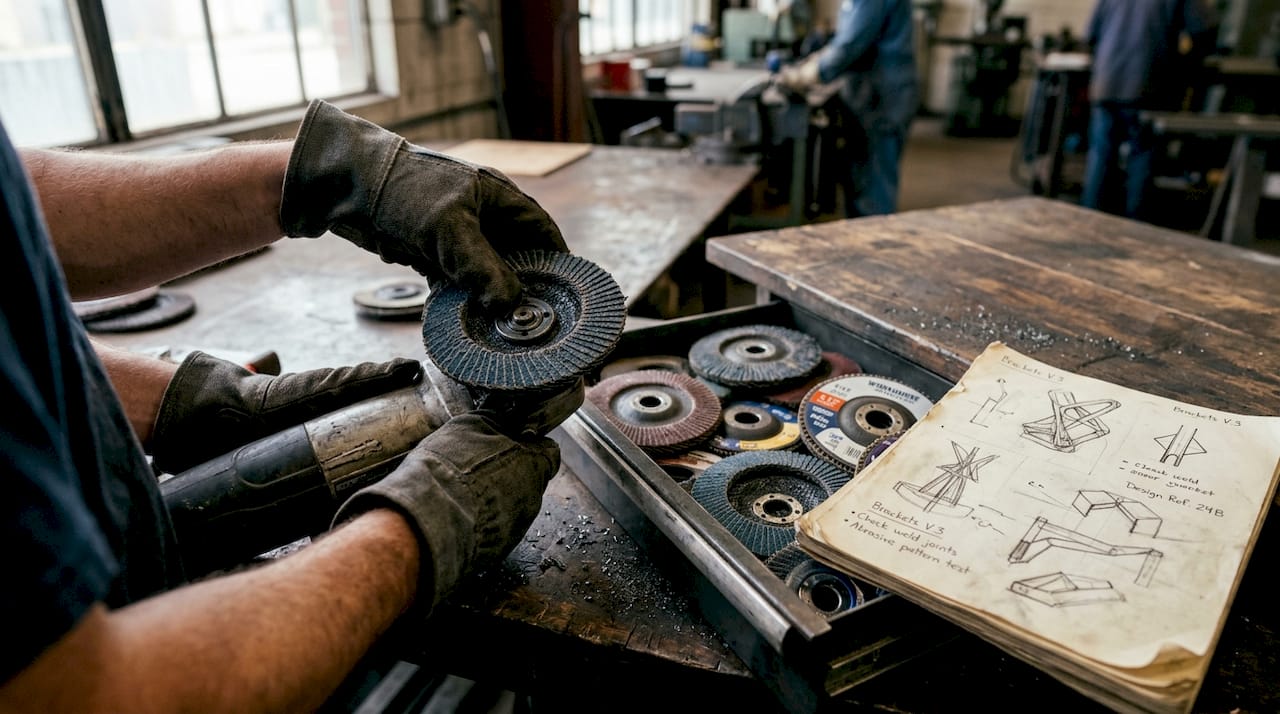
Grinding wheel types each have their place, and the comparative analysis of flap discs against other abrasive tools shows that in manufacturing settings, flap discs can reduce finish time by up to 25% compared to traditional wheels. That kind of efficiency gain adds up fast on a busy shop floor.
How to choose the right tool for your specific task:
- Identify your priority. Are you removing a lot of material fast, or are you after a clean finish? Heavy removal favors a grinding wheel; blending and finishing favor a flap disc.
- Consider your material. Softer metals like aluminum clog grinding wheels quickly. Flap discs with the right grain type clear loading more effectively.
- Think about access. Tight weld joints and curved surfaces are far easier to work with a flap disc than a rigid grinding wheel.
- Factor in operator hours. Over a long shift, the lower vibration of a flap disc reduces hand-arm fatigue, which matters in high-volume fabrication.
- Check your finish requirement. If the part needs to be painted, coated, or inspected for weld quality, the smoother finish from a flap disc means less rework.
The bottom line: grinding wheels still make sense for heavy stock removal on hard steel, but for most weld finishing and surface prep tasks in fabrication, flap discs deliver better results with less effort.
Types of flap discs and selecting the right one
Choosing the right flap disc starts with the abrasive grain, because each grain type is engineered for a specific performance window. Getting this right affects everything from cut rate to how long the disc actually lasts.
Aluminum oxide is the most common and most affordable grain. It performs well on mild steel, wood, and general purpose metalwork, but it wears faster than premium options. It’s the practical choice for general shop work where you’re not pushing the disc hard all day.
Zirconia alumina is a significant step up in durability and aggression. The grain self-sharpens as it wears, which maintains cutting speed throughout the disc’s life. It handles stainless steel, carbon steel, and harder alloys effectively. Zirconia type 29 discs are especially popular for structural fab work and pipe work where aggressive cutting is needed over long sessions.
Ceramic alumina sits at the top of the performance range. It runs cooler than other grains, which makes it the right call for heat-sensitive metals or high-pressure grinding where you need to maintain material integrity. It’s more expensive upfront but often the most cost-effective over a production shift due to its extended life.
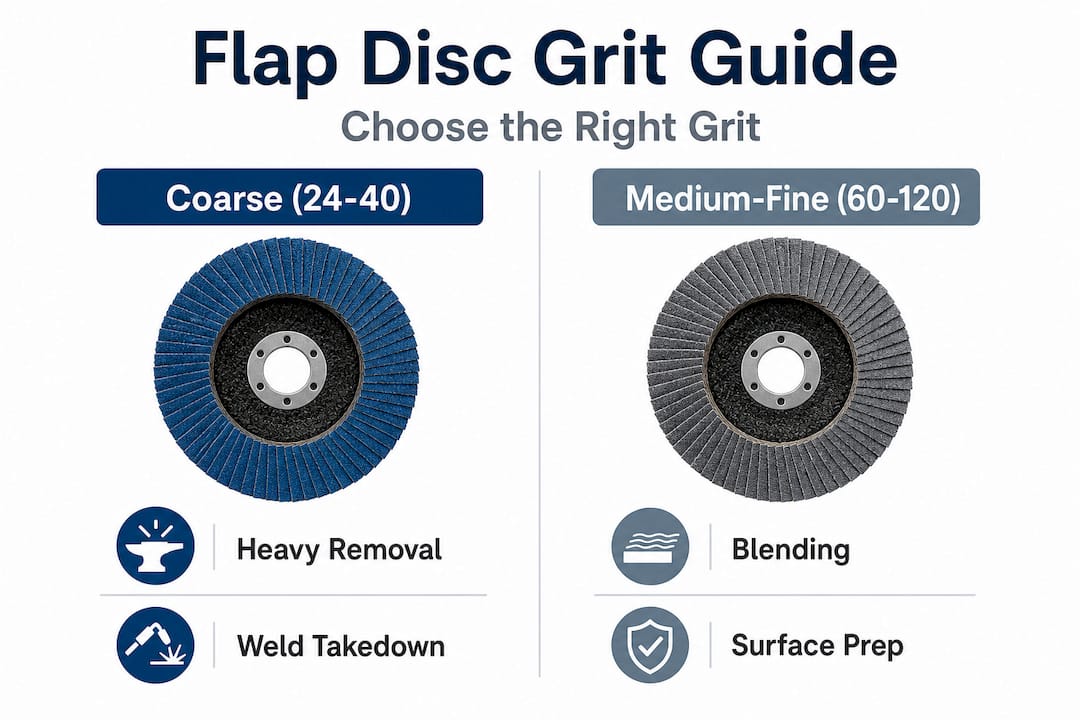
Grit selection is equally important. Here’s a practical breakdown:
| Grit range | Application |
|---|---|
| 24 to 40 grit | Heavy stock removal, weld bead takedown |
| 60 to 80 grit | General weld blending, surface prep |
| 100 to 120 grit | Light finishing, pre-paint prep |
For working with aluminum specifically, aluminum flap discs are formulated to resist loading, where soft metal clogs the abrasive surface. Standard discs will load up fast and become useless on aluminum. Using the wrong disc not only kills productivity but can also create a fire hazard if mixed metal debris accumulates on the disc.
Key tips for picking the right flap disc:
- Match grain type to the hardness of your base metal
- Use coarser grit for initial passes and step up in grit for finishing
- Choose Type 29 for curved surfaces and contoured welds
- Choose Type 27 for flat welds and broad surface preparation
- Always check the maximum RPM rating on the disc against your grinder’s speed
- For stainless steel, use a disc rated for stainless to avoid contamination
As guidance on choosing appropriate flap discs for specific manufacturing applications confirms, matching the disc to the job is the single biggest factor in both performance and cost efficiency.
Best practices for using flap discs safely and effectively
A quality flap disc in the wrong hands, or used without the right setup, is both a safety risk and a waste of money. Getting the most out of your disc starts before you even mount it to the grinder.
First, your PPE setup. Always wear a full face shield (not just safety glasses), heavy leather gloves, hearing protection, and a long-sleeve shirt or jacket when running a flap disc. Abrasive debris and disc fragments travel fast. A proper cutting tool setup always begins with the right protective gear in place.
Five best practice steps for flap disc use:
- Mount correctly. Ensure the disc is properly seated on the backing pad and the arbor nut is tightened securely. A disc that isn’t fully seated can shift under load and cause vibration or disc failure.
- Work at the correct angle. For Type 27 discs, operate at 5 to 15 degrees from the work surface. For Type 29, you can work at up to 25 degrees for more aggressive cutting. Using too steep an angle accelerates wear and reduces control.
- Apply consistent, moderate pressure. Let the disc do the cutting. Pressing hard overloads the abrasive, generates excess heat, and shortens disc life. A steady, even pass at the right angle outperforms heavy-handed grinding every time.
- Match speed to the task. Check the disc’s maximum RPM and make sure your grinder does not exceed it. Running a disc beyond its rated speed is a serious safety hazard and reduces performance rather than improving it.
- Inspect before every use. Look for cracked backings, delaminating flaps, or worn-down sections before mounting the disc. The use cases for flap discs in professional metalworking environments all involve routine disc inspection as a non-negotiable step.
Common mistakes to avoid include grinding with a brand-new coarse disc on a finished surface (you’ll remove too much material), using a single disc for both steel and stainless (cross-contamination risks corrosion), and running a worn disc past its usable life.
A worn flap disc that vibrates, skips across the surface, or produces uneven material removal should be replaced immediately. Continuing to use a degraded disc increases the risk of disc failure, operator injury, and substandard weld finishes.
Pro Tip: Store your flap discs flat in a cool, dry location away from solvents and humidity. Moisture weakens the backing material and degrades the adhesive holding the abrasive flaps. A disc stored improperly can fail in use even if it’s never been used.
Why flap discs are the unsung hero of welding shops
There’s a tendency in fabrication to chase the newest equipment, the latest welding technology, the freshest plasma cutter. Flap discs don’t generate excitement. They sit in a bin, they get grabbed without much thought, and they do their job without any recognition. That’s exactly why so many shops are leaving performance and money on the table.
We’ve seen shops where welders were spending significant time on finish work simply because they were defaulting to grinding wheels out of habit, then switching tools to clean up the surface. One mid-sized structural fabrication shop made a single change: switching their standard steel work over to zirconia Wrenna Type 27 flap discs in 60 grit for all weld blending. The result was fewer tool changes per shift, a more consistent surface finish, and a measurable reduction in time spent on finishing operations. No new equipment. No retraining. Just a smarter consumable choice.
The lesson here isn’t complicated. Tool choice is one of the last places you want to cut corners in professional metalwork. A five-dollar difference in disc price means nothing if the cheaper disc wears out twice as fast, leaves a rougher surface, or causes a rework cycle. Premium flap discs pay back in consistency, fewer change-outs, and less time correcting finish quality.
The flexibility of a good flap disc also changes how you approach a job mentally. When you know one tool can handle the blend and the finish, you move faster and with more confidence. That lighter touch, that ability to work at different angles without switching setups, is what separates a productive fabricator from one who’s constantly fighting the process.
Pro Tip: Investing in a higher-quality flap disc at the start of a job almost always costs less over the course of a project than cycling through multiple budget discs to finish the same work.
Find the right flap discs and welding supplies for your next job
Whether you’re stocking a full fabrication shop or restocking for your next project, having the right consumables on hand before the job starts keeps your workflow moving.
At Simpleweld, we carry a curated selection of flap discs built for professional use, from standard aluminum oxide options to high-performance ceramic and zirconia discs in both Type 27 and Type 29 profiles. You can shop flap discs across multiple grain types and grit ranges to match exactly what your work demands. Need to complete your setup? Browse our full range of welders for sale and our cutting tools collection to get everything you need from one trusted source. Professional-grade products, straightforward ordering, and stock built for the demands of real shop work.
Frequently asked questions
What metals can flap discs be used on?
Flap discs work well on steel, stainless steel, aluminum, and many non-ferrous metals if matched to the correct abrasive type for each material.
When should I replace a flap disc?
Replace a flap disc when abrasive flaps are worn down, the disc vibrates excessively, or it no longer removes material efficiently. Guidance on disc replacement timing follows the same logic: when performance drops, so does safety.
Can flap discs be used for both grinding and finishing?
Yes, flap discs are designed for stock removal, deburring, and blending or finishing depending on grit and construction. The grinding wheel comparison confirms flap discs cover multiple steps that would otherwise require separate tools.
Do flap discs need to be used at a specific speed?
Yes, always follow the manufacturer’s recommended maximum RPM to ensure safety and disc performance. Exceeding the rated speed is one of the most common causes of disc failure in professional metalworking settings.