

Choosing the right safety gear is genuinely harder than most safety briefings let on. Between welding fumes, arc flash, grinding sparks, and fall hazards, the risks in welding, construction, and metalworking environments stack up fast. Applying the same generic PPE to every task is one of the most persistent mistakes in these trades, and it leaves workers believing they are protected when they are not. These safety gear tips will walk you through how to choose, use, and maintain the right equipment for the actual hazards you face every day.
Table of Contents
- Key takeaways
- 1. Start with a real hazard assessment
- 2. Follow the hierarchy of controls before reaching for PPE
- 3. Welding helmet selection: shade numbers and fit
- 4. Eye protection beyond the helmet
- 5. Glove selection: matching material to the actual risk
- 6. Respiratory protection: respirators, fit tests, and fit checks
- 7. Footwear: steel toes and beyond
- 8. Common pitfalls that undermine safety programs
- 9. Comparing safety gear options: what to look for by category
- 10. Situational gear choices: matching equipment to the specific job
- My honest take on where safety gear programs break down
- Gear up with confidence from Simpleweld
- FAQ
Key takeaways
| Point | Details |
|---|---|
| Match gear to the specific task | Generic PPE fails when it is not selected for the hazard; always assess the task first. |
| Shade numbers matter for helmets | OSHA minimums are a floor, not a recommendation. Go one to two shades darker for real comfort and protection. |
| Fit tests and fit checks are not the same | Fit checks happen every time you put on a respirator; fit tests are the annual OSHA requirement. |
| Medical clearance is mandatory for respirators | You cannot legally or safely skip the medical evaluation before respirator fit testing. |
| Inspect and replace gear on schedule | Damaged or expired safety gear offers false confidence. Hard hats, helmets, and respirators all have replacement timelines. |
1. Start with a real hazard assessment
The single best piece of best safety equipment advice anyone can give you is this: do not pick your gear until you know your hazards. That sounds obvious, but the default in most shops and sites is to hand out a standard PPE kit and call it done. One-size-fits-all PPE policies fail consistently because the same glove that handles heat does not handle chemical splash, and the same respirator that works for grinding dust will not protect you from hexavalent chromium.
Walk through the specific task. Identify what you are cutting, grinding, welding, or handling. Note the environment: is there confined space, poor ventilation, elevated work, extreme heat? Only after that do you start matching gear to risk. This step takes maybe twenty minutes and saves you from a false sense of security that lasts the whole shift.
2. Follow the hierarchy of controls before reaching for PPE
PPE is the last line of defense, not the first. The hierarchy of controls puts elimination and engineering solutions above personal protection. If you can increase ventilation, substitute a less toxic material, or use local exhaust at the weld point, do that first. PPE should handle whatever risk remains after those controls are in place.
This matters practically because relying only on a respirator in a space with poor airflow is putting all your protection on the weakest link. In welding and fabrication shops, local exhaust ventilation combined with respiratory protection is far stronger than either alone. Know what controls are in place before you decide how much protective gear is enough.
3. Welding helmet selection: shade numbers and fit
OSHA 29 CFR 1910.252 specifies minimum welding helmet shade numbers by process and amperage, typically ranging from shade 8 to shade 13. Those are minimums. Most experienced welders go one to two shades darker than the legal floor because it reduces eye fatigue and provides a meaningful buffer against arc eye.
When buying a helmet, check that the lens carries an ANSI Z87.1 marking. Auto-darkening helmets are popular on fabrication floors because they cut the habit of flipping up between tacks, which is exactly when arc flash injuries happen. Check the headgear adjustment before every session, not just when it feels loose. Proper welding helmet maintenance extends service life and keeps lens clarity where it needs to be.
4. Eye protection beyond the helmet
Even when wearing a welding helmet, secondary eye protection matters during grinding and cutting. ANSI Z87.1 certification is your baseline when choosing safety glasses or goggles. This standard covers impact resistance, optical clarity, and coverage.
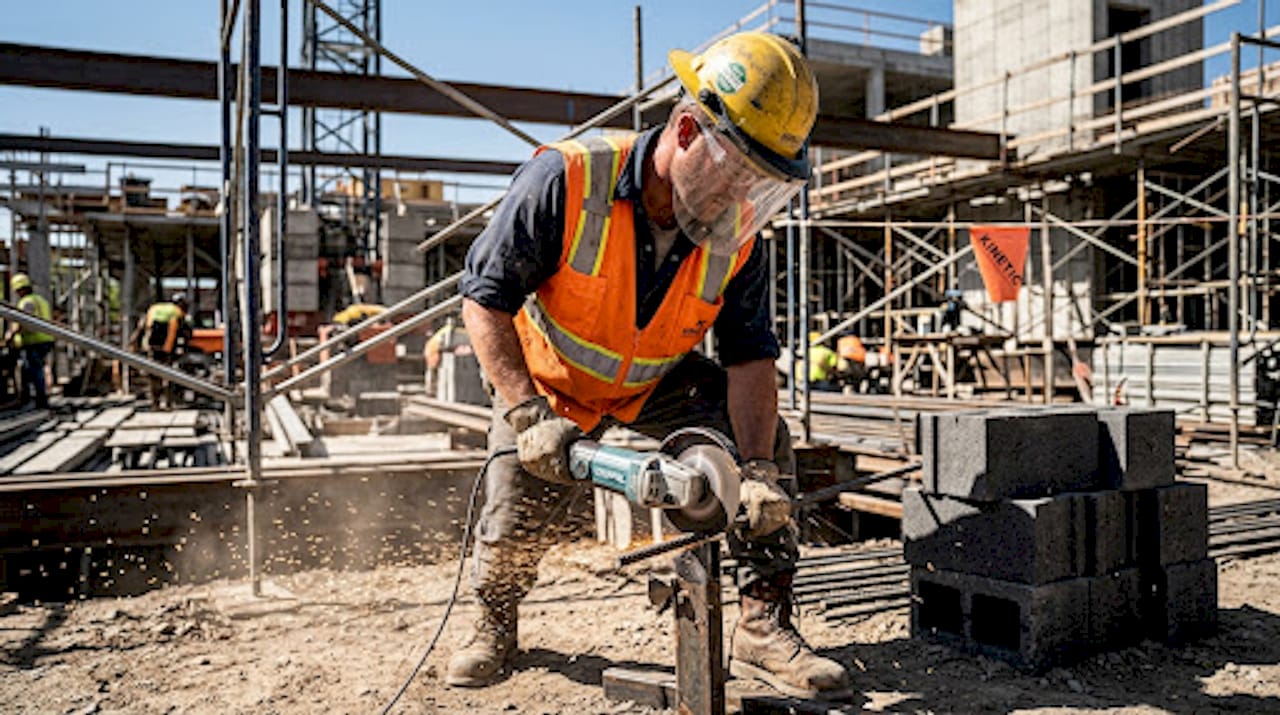
Anti-fog coatings are worth paying for. Fogged lenses lead to workers pushing glasses up their nose or moving them off their face entirely, which defeats the purpose. For workers in dusty metalworking environments, wraparound frames with side shields provide coverage that standard glasses do not. If you wear corrective lenses, look for over-glasses rated to Z87.1, or invest in prescription safety glasses so you are not layering poorly fitting gear.
5. Glove selection: matching material to the actual risk
Gloves are where incorrect selection creates false security. Leather welding gloves are excellent for high-heat arc welding but restrict dexterity for TIG work where you need to feel the filler rod. Thin TIG gloves are good for control but offer almost no protection for stick welding. Choose the glove for the task, not the trade.
Chemical resistance matters for anyone handling solvents or cleaning compounds before or after welding. Nitrile gloves can have surprisingly short breakthrough times against solvents like acetone. Always check the manufacturer’s chemical resistance chart, not just the product name. Cut-resistant gloves are standard on fabrication floors where sheet metal handling is part of the job.
Pro Tip: Keep two glove types at your station: one for high-heat arc work and one for prep and finishing tasks. Switching takes five seconds and dramatically changes the protection level for each task.
6. Respiratory protection: respirators, fit tests, and fit checks
This is the area with the most confusion and the most compliance risk. Fit checks and fit tests are not the same thing. A fit check is what you do every time you put on a respirator: press the facepiece, inhale to check for inward leakage, exhale to check the exhalation valve. It takes thirty seconds. A fit test is the annual OSHA requirement conducted by a trained person using either qualitative or quantitative methods to confirm the specific respirator model and size fits a specific worker.
Both are required. Neither replaces the other. Beyond that, medical clearance is mandatory before fit testing. A worker with undiagnosed cardiovascular or pulmonary issues faces real risk when wearing negative-pressure respirators. Many supervisors skip this step because it adds paperwork, but OSHA considers it a non-negotiable part of a respiratory protection program.
Pre-fit education increases first-time pass rates significantly. Brief workers on how to don the respirator correctly before the test, and have multiple sizes available. Sending someone into a fit test cold with one respirator size is how you burn time and frustrate the process.
7. Footwear: steel toes and beyond
Safety footwear is often treated as a box to check, but the difference between ASTM-rated boots and cheap work boots becomes obvious the first time something heavy drops. For welding, boots should also be leather or otherwise spark-resistant. Avoid synthetic materials near arc and spatter.
Traction matters on construction sites with loose material, wet concrete, or elevated surfaces. Look for outsoles rated for the specific surface conditions you work on. If you are regularly on elevated steel structures, fall protection requirements under OSHA 1926.501 kick in at six feet, and your footwear choice affects both grip and harness compatibility.
8. Common pitfalls that undermine safety programs
The mistakes that get workers hurt are usually not dramatic. They are small, repeated lapses that build up. Here are the most common ones in welding and construction environments:
- Using damaged gear. Hard hats should be replaced every two to five years, or immediately after a significant impact. Cracks, faded shells, and degraded suspension systems mean the hat no longer meets its rated protection level.
- Skipping medical clearance before respirator use. This is both a compliance failure and a genuine health risk.
- Over-relying on PPE when engineering controls are missing or inadequate.
- Mixing incompatible gear. Full-face respirators do not work properly with certain welding helmets. Test combinations before sending workers into the field with them.
- Inadequate documentation. Training records, fit test results, and maintenance logs are required under OSHA standards and are checked during inspections.
“The worker who thinks their PPE is adequate because it meets the minimum spec is the one most likely to get hurt. Minimums are where protection starts, not where it ends.”
9. Comparing safety gear options: what to look for by category
Here is a practical comparison of what separates entry-level from professional-grade gear across the main categories. This is not a brand endorsement table. It is a guide on how to evaluate what you are buying.
| Category | Entry-level features | Professional-grade features | What to prioritize |
|---|---|---|---|
| Welding helmets | Fixed shade, basic headgear | Auto-darkening, ANSI Z87.1, adjustable ADF | ADF reaction time, shade range |
| Respirators | Disposable N95 | Half-face or full-face elastomeric, P100 | NIOSH approval, fit test compatibility |
| Gloves | Single-layer leather | Multi-layer, task-specific materials | Dexterity vs. heat rating match |
| Safety glasses | Basic Z87.1 | Anti-fog, prescription-compatible, wraparound | Lens coating, side coverage |
| Footwear | Steel toe, basic rubber | ASTM F2413, spark-resistant leather | Outsole traction rating |
When looking at top safety gear brands, prioritize products that carry visible OSHA or ANSI compliance markings and include documentation. Any reputable safety gear buying guide will tell you that the brand matters less than the certification. That said, established manufacturers tend to invest more in fit system design, which is where cheaper gear usually cuts corners.
Pro Tip: When testing a new helmet or respirator model, wear it for a full shift before committing to buying in bulk. Comfort problems that seem minor in a five-minute demo become significant over eight hours.
10. Situational gear choices: matching equipment to the specific job
Not every weld is the same, and your safety gear for work should reflect that. Here are task-specific recommendations worth knowing:
- Stainless steel welding produces hexavalent chromium fume, which is a known carcinogen. A PAPR (powered air-purifying respirator) with an assigned protection factor of 25 or higher is often required, not just recommended.
- Confined space welding means oxygen levels and fume concentrations can change rapidly. Supplied-air respirators may be necessary, along with continuous atmospheric monitoring.
- Overhead or elevated construction work triggers OSHA fall protection requirements at six feet. Full-body harnesses must meet ANSI/ASSE Z359 standards, and the anchor point must support 5,000 pounds per attached worker.
- Hot environments in summer months affect both the worker and the gear. Heat-resistant gloves lose integrity faster in sustained high temperatures. Check replacement intervals more frequently in summer operations.
- Dusty metalworking environments benefit from goggles over safety glasses, and N95 respirators should be upgraded to P100 filtration when grinding metals that produce fine respirable particles.
My honest take on where safety gear programs break down
I have seen safety programs that look excellent on paper collapse the moment they hit an actual job site. The paperwork is complete, the gear is purchased, and the training box is checked. Then a worker shows up for a fit test having never worn a respirator before, the only size available does not fit, and everyone moves on assuming the problem is solved.
What I have found consistently is that the failure point is almost never the gear itself. It is the gap between what the program says and what supervisors actually enforce. Workers skip the fit check because nobody checks. They use the wrong glove because nobody stocked the right one. They wear a shade 10 lens on a job that needs a shade 12 because that is what was in the cabinet.
The shops that get this right treat hazard assessment as a living process, not a one-time form. They stock multiple respirator sizes and multiple glove types. They replace gear on schedule rather than waiting for something to fail visibly. And they build enough trust with workers that someone can say “this does not fit” without worrying about looking difficult.
Investing in quality gear from the start also changes the dynamic. Workers are more likely to wear gear that is comfortable and well-fitted. Durable equipment from proven welding gear sources also reduces the replacement cycle and lowers long-term cost compared to cycling through cheap alternatives every few months.
The uncomfortable truth is that most workplace safety incidents involving PPE failure were predictable. The gear was wrong, outdated, or poorly fitted. The fix rarely requires new technology. It requires someone paying attention.
— Taylor
Gear up with confidence from Simpleweld
If these safety gear tips have you thinking about what you are currently working with, Simpleweld has the equipment to back up the decision. The welding safety gear collection includes helmets, gloves, respirators, and apparel built to OSHA and ANSI standards, sourced from manufacturers who treat certification as a baseline, not a selling point. You will also find the full range of welding helmets with auto-darkening options, adjustable headgear, and proper shade ratings for every process. Whether you are kitting out a full fabrication crew or replacing gear that has hit its service limit, Simpleweld makes it straightforward to find what you actually need, not just what looks good on a shelf.
FAQ
What shade number should I use for my welding helmet?
OSHA specifies minimum shade numbers by process and amperage, typically shade 8 through 13 for arc welding. Most experienced welders go one to two shades darker than the minimum for better comfort and eye protection.
What is the difference between a respirator fit check and a fit test?
A fit check is performed by the wearer each time before putting on a respirator to verify the seal. A formal fit test is an annual OSHA requirement conducted by a trained person to confirm the respirator model and size suits that specific worker.
Do I need medical clearance before using a respirator at work?
Yes. Medical evaluation is mandatory before respirator fit testing under OSHA standards. Skipping it is both a compliance violation and a real health risk, particularly for workers with undiagnosed respiratory or cardiovascular conditions.
How often should I replace my hard hat?
Hard hats should be replaced every two to five years under normal use, or immediately after any significant impact. Inspect the shell and suspension system regularly for cracks, fading, or deformation that signals degraded protection.
What respiratory protection do I need for welding stainless steel?
Stainless steel welding produces hexavalent chromium fume, which requires higher protection than standard dust masks. A PAPR with an assigned protection factor of 25 is often required, and OSHA welding standards provide specific guidance based on process type and exposure levels.